
And What Actually Helps People Change
By Megan Carraco, LCPC
Founder, Potomac Behavioral Health
Trauma-informed psychotherapy serving Maryland and Virginia
Specialties include EMDR, Somatic Experiencing, and nervous-system-based psychotherapy
The short answer (if you just want the takeaway)
People break New Year’s resolutions because most resolutions ask for behavior change without addressing stress, habits, emotional patterns, or nervous system capacity. When life gets busy or overwhelming, the brain defaults to what feels familiar and safe, not what sounds good on January 1.
Expert Insight on Willpower and Self-Control
Research in psychology has long examined why self-control sometimes seems to run out. A prominent line of work on ego depletion suggests that exerting self-control in one situation can reduce the capacity for self-control moments later, especially under stress or temptation. In classic experiments, participants who were asked to resist highly tempting snacks, including candy and M&Ms, later showed reduced restraint on unrelated tasks such as persisting on difficult puzzles or consuming more ice cream when given the chance, compared with participants who were not exposed to temptation (Baumeister et al., 1998; Cherry, 2021). While modern research has added nuance to the ego depletion model, the core insight remains clinically useful: sustained effort, stress, and repeated restraint throughout the day can make self-control more difficult later on, contributing to why New Year’s resolutions often falter.
Why Is It So Hard to Keep New Year’s Resolutions?
Every January, I see the same pattern in my therapy practice.
Smart, capable people come in saying things like:
-
“I really thought this would be the year.”
-
“I don’t understand why I can’t just stick to it.”
-
“I know what to do. I just don’t do it.”
And every January, I find myself reassuring them of the same thing. This is not a willpower problem, a character flaw, or a motivation issue. It is a systems and nervous system issue. Let’s talk about why New Year’s resolutions fail so reliably, and what actually helps people change in real life, not in motivational quotes.
Why New Year’s Resolutions Feel So Convincing on January 1
Behavioral researchers describe something called the Fresh Start Effect. When we reach a temporal landmark like New Year’s Day, a birthday, or buying a new home, our brains create a psychological divide between “before” and “after.” It feels like a clean slate.
This is why January 1 feels powerful. It creates a mental line of demarcation, distancing us from old habits or past failures, and creating a sense of possibility. The problem is that motivation is not infrastructure.
January 1 provides energy. January 10 requires a plan.
The Psychology of Why New Year’s Resolutions Fail
1. The goal is vague
“Be less anxious” is not a plan. It is a wish. Your nervous system cannot execute vague intentions. It needs specific, repeatable actions. A goal like “practice two minutes of grounding after my last meeting” gives your brain something concrete to do.
2. The resolution is based on an ideal life, not a real one
Many people set goals as if they are sleeping well, finishing work on time, and feeling emotionally regulated. In reality, they are parenting, caregiving, managing chronic stress, or running on fumes. From a nervous system perspective, large changes layered onto an already stressed system do not feel motivating. They feel unsafe.
3. You are using willpower to solve a systems problem
This is where psychology gets especially interesting.
For years, researchers studied willpower using a concept called ego depletion, the idea that self-control functions like a limited resource that can be temporarily drained. 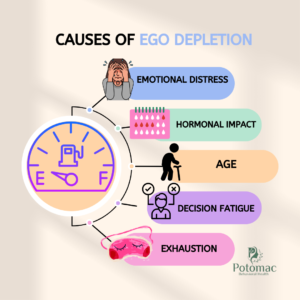
One classic set of experiments illustrates this vividly. In these studies, participants were asked to sit in a room with highly tempting foods, including cookies, candy, or M&Ms. Some participants were allowed to eat them. Others, particularly people who were actively dieting, were instructed to resist eating the snacks and stick to bland alternatives instead.
Later, in what seemed like an unrelated task, those who had spent time resisting the tempting food showed significantly less self-control. In some versions of the study, they gave up faster on difficult puzzles. In others, they went on to eat more ice cream when given the opportunity.
The takeaway was not that dieters lacked discipline. It was that the act of resisting temptation consumed mental and emotional resources, making self-control harder later on.
In other words, sitting next to the M&Ms all day mattered.
While more recent research has added nuance to the ego depletion model, the core insight remains useful clinically. Self-control is harder when people are under sustained pressure, surrounded by temptation, or emotionally taxed.
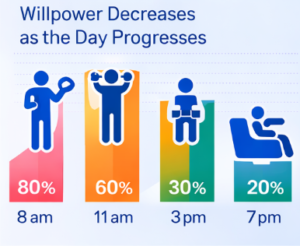
This matters for New Year’s resolutions because most people are trying to change behavior while still:
- working long days
- Parenting
- managing anxiety or burnout
- resisting dozens of small stressors and temptations
By evening, willpower has often already been spent. This is not a personal failure; It is predictable systems failure.
4. Shame is quietly running the show
Many resolutions are powered by unspoken beliefs like:
-
“I should be better by now.”
-
“Other people can do this. Why can’t I?”
-
“This is the year I finally fix myself.”
Shame creates urgency, but it does not create sustainability.
The moment a shame-based goal wobbles, people tend to disengage entirely.
A more helpful question is not “What is wrong with me?”
It is “What system changes would actually help here?”
5. There is no plan for when things go wrong
Most resolutions assume ideal conditions. Real life rarely cooperates. One of the most effective tools in behavior change research is If–Then planning. If X happens, then I will do Y.
For example:
-
If I miss a workout, then I take a ten-minute walk the next day.
-
If I start spiraling at night, then I name the emotion and take three slow exhales.
This removes the emotional debate from the moment and replaces it with a script.
6. Motivation is mistaken for sustainability
Motivation spikes are real. They are also temporary. A habit that only works when you feel inspired is not a habit. It is mood dependent.
The habits that last tend to be:
-
small
-
repeatable
-
slightly boring
-
possible even on hard days
Consistency beats intensity every time.
7. The nervous system is dysregulated
This is the piece most resolution advice ignores. When your nervous system is stuck in fight, flight, or freeze, change does not feel exciting. It feels unsafe. For people with anxiety, trauma histories, chronic stress, or burnout, avoidance and shutdown are not failures. They are protective responses. Trying to override them with discipline is like yelling at a smoke alarm instead of addressing the fire.
What actually helps people change
Step 1. Choose one outcome and one behavior
Outcome: What do you want to experience more of?
Behavior: What small action supports that outcome?
Example:
Outcome: Less anxiety.
Behavior: Two minutes of grounding after your first meeting.
Step 2. Make it doable on your worst day
If the habit only works when you are calm and rested, it will not survive real life. Shrink it until the answer is yes.
Step 3. Decide in advance what you will do when it gets hard
If I forget, then I restart tomorrow without punishment. If I miss two days, then I return to the smallest version. This is how one slip stops becoming abandonment.
Step 4. Regulate before you try to transform
If your body feels constantly on edge or overwhelmed, the most effective resolution may not be “do more.” It may be “support my nervous system.” That can include grounding practices, boundaries around stress, and therapy approaches that work at the nervous system level.
When therapy helps more than another resolution
If your goals keep collapsing because of panic, shutdown, emotional overwhelm, trauma triggers, or long-standing patterns that repeat despite effort, therapy can help in ways self-help strategies cannot. Approaches like EMDR and Somatic Experiencing work with the nervous system rather than against it.
Instead of shaming you into “trying harder”, therapy helps you understand what keeps getting in your way. Armed with this understanding, you can address it directly. Potomac Behavioral Health provides therapy focused on nervous system regulation to adults and teens in Maryland and Virginia.
<h2 id=”new-years-resolutions-faq”>Frequently Asked Questions</h2>
Why do people break New Year’s resolutions?
Because most resolutions depend on motivation and willpower while ignoring habits, environment, stress, and nervous-system capacity.
How can I make my resolution actually stick?
Use a small repeatable behavior, attach it to a prompt, and create an If–Then plan for your biggest obstacle.
What’s the best alternative to a New Year’s resolution?
A system: one small behavior + a cue + an obstacle plan + a restart plan.
When should I consider therapy instead of “trying harder”?
When your struggle is driven by anxiety, burnout, trauma responses, avoidance, or repeated emotional patterns that don’t respond to self-help strategies.
The Bottom Line
If you have broken New Year’s resolutions before, you are not broken. Most people do not fail because they lack discipline. They fail because they are using the wrong tools for the problem they are trying to solve.
Sustainable change comes from clarity, support, and systems that respect how the nervous system actually works. That is a much kinder place to start the year.