
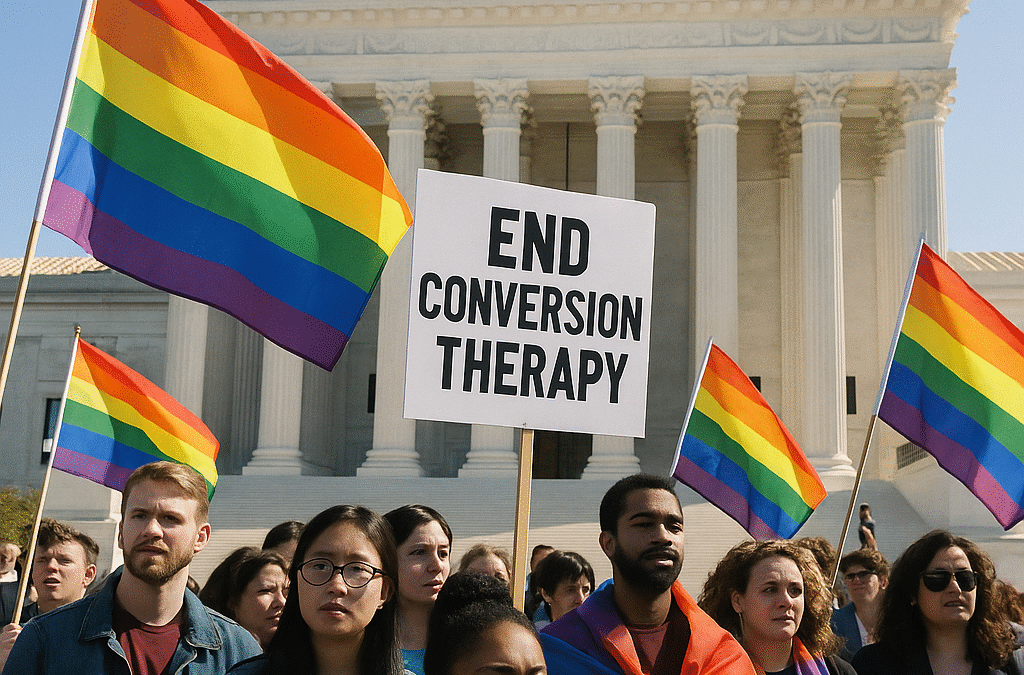
The U.S. Supreme Court is reviewing Chiles v. Salazar, a case that could redefine how states regulate conversion therapy for LGBTQ+ minors. The outcome will determine whether bans on conversion therapy currently enacted in 25 states can legally stand under the First Amendment’s free speech protections.
At the center of the case is a Colorado law that prohibits licensed mental health professionals from offering conversion therapy to minors. The law was designed to protect youth from psychological harm. The plaintiff, Kaley Chiles, argues that it violates her free speech and religious rights as a counselor.
How Conversion Therapy Took Root and Why the Mental Health Field Reversed Course
To understand today’s debate over conversion therapy, it’s important to look back at the history of psychology and psychiatry and how our understanding of human sexuality evolved. For much of the 20th century, homosexuality was pathologized. In 1952, the first edition of the Diagnostic and Statistical Manual of Mental Disorders (DSM-I) (the field’s official diagnostic guide) listed homosexuality under “sociopathic personality disturbance.” This classification reflected the social norms and moral judgments of the time more than any scientific evidence.
As a result, psychologists and psychiatrists believed same-sex attraction was something that could (and should) be “treated.” The assumption was that heterosexuality was the “healthy” baseline, and any deviation was pathological. It was a perspective steeped in stigma, religion, and cultural fear rather than neuroscience or psychology.
What Is Conversion Therapy? Why Do Experts Oppose It?
Conversion therapy (also known as “reparative therapy” or sexual orientation change efforts) attempts to change a person’s sexual orientation or gender identity through counseling or religious techniques. Sometimes it looks like talk therapy, with a counselor trying to convince someone that their feelings are “wrong” or that they should “act straight”. In more extreme cases, it has involved shaming, prayer sessions, or even more disturbing physical methods like aversion therapy.
Aversion therapy is an old-fashioned technique borrowed from behavioral psychology classical conditioning theories popular in the mid-1900s. These are the same ideas that inspired the famous Pavlov’s dogs experiment. In Pavlov’s classic experiment, dogs learned to salivate at the sound of a bell because it was repeatedly paired with food. Over time, the brain linked the two experiences, proving what neuroscientists now summarize as:
“Neurons that fire together, wire together.”
Conversion therapy used the same principle, but it a harmful and misguided way. Conversion therapists would pair same-sex attraction with painful or unpleasant stimuli to make the patient associate same-sex attraction with fear, disgust, or pain. In this therapy, a patient might be shown photos or videos of same-sex couples while being given a mild but painful electric shock, nausea inducing drugs, or even smelling chemicals with a foul odor. The patient might then be rewarded or praised when expressing attraction to the opposite sex. The goal was to make the brain link same-sex attraction with physical discomfort and heterosexual attraction with relief or approval.
The Turning Point: The 1973 APA Decision
By the late 1960s, cultural shifts, activism, and new research began to challenge that framework. In 1973, after years of advocacy by gay and lesbian psychiatrists, the American Psychiatric Association voted to remove homosexuality from the DSM-II.
This landmark decision marked a sea change: homosexuality was no longer considered a mental illness. Over time, the American Psychological Association, American Medical Association, and American Counseling Association followed suit, affirming that same-sex attraction is a normal variation of human sexuality, and affirming care is the ethical professional standard.
Why the Stakes are High for Kids: Elevated Risk of Self-Harm in LGBTQ+ Youth
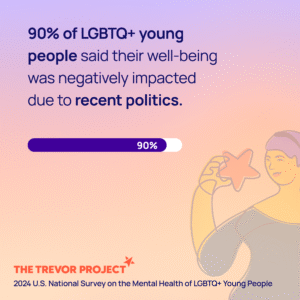
One of the tragic realities is that LGBTQ+ young people already face significantly higher rates of suicidal ideation and attempts, often due to stigma, discrimination, rejection, and trauma.
Consider these sobering data:
-
In a 2024 national survey, 39% of LGBTQ+ youth seriously considered attempting suicide in the past year, and 12% attempted suicide.
-
Among gay or lesbian youth, 37% seriously considered suicide, and 19% attempted it, compared to 14% and 6% respectively among heterosexual peers.
-
Other research shows that lesbian, gay, and bisexual youth are about three times more likely to attempt suicide than heterosexual youth.
-
In adults, NIH studies have found that rates of suicide-related behaviors (ideation, planning, attempts) for gay/lesbian individuals are 2 to 6 times higher than for heterosexual peers.
These statistics make clear: LGBTQ+ youth already live with heightened vulnerability. Introducing or permitting discredited, coercive mental health practices, especially during formative years, can compound trauma and risk.
The Case Before the Supreme Court: Chiles v. Salazar
In 2019, Colorado passed a law banning licensed therapists from performing conversion therapy on minors. The law sought to protect youth from practices condemned as dangerous and unethical.
Now, in 2025, the case Chiles v. Salazar challenges that ban. Plaintiff Kaley Chiles, a Christian counselor, argues that the law violates her First Amendment rights to free speech and religious expression. Colorado maintains that it regulates professional conduct, not personal speech, to safeguard public health. Chiles’s attorney, James Campbell, argues that laws like Colorado’s ban “would allow states to silence all kinds of speech” and could “transform counselors into mouthpieces for the government”. Representing the Trump administration is Principal Deputy Solicitor General Hashim Mooppan, who argues that there is no long tradition of state regulation of medical treatment that is based solely in speech, like Chiles’s talk therapy.
Lower courts sided with the state. But the U.S. Supreme Court’s decision to hear the case signals potential shifts in how the law defines “speech” within professional practice.
What’s at Stake in Chiles v. Salazar
This isn’t just a legal battle over one state’s law. The outcome could dramatically reshape how states regulate therapy, what’s allowed in counseling, and who gets protected. Colorado’s law (The Minor Conversion Therapy Law, or MCTL) expressly governs licensed mental health professionals (psychologists, licensed professional counselors, and clinical social workers). These licenses are controlled at the state level by state health or counseling departments. The law does not apply to unregulated professions including life coaches or religious or ministerial counseling done outside the scope of a professional license. Because Chiles is a licensed counselor, she is directly bound by the MCTL, and that’s why she is challenging it. Chiles argues that the law unfairly censors her speech, while leaving unlicensed counselors free to say the same things.
If the Court sides with Chiles, several consequences are likely. Many state laws like Colorado’s could be invalidated or rendered less enforceable, especially those written broadly to silence certain therapeutic approaches. State boards may also have less clear authority to discipline therapists for promoting conversion efforts, unless they can frame restrictions narrowly (e.g. banning only coercive of physically harmful methods, like aversion therapy). An overturn of Colorado’s law could then cascade to the 25 other states with conversion therapy bans.
A pro-Chiles decision could also blur the line between acceptable spiritual counseling and discredited therapy, creating confusion for providers, clients, and licensing agencies. Legal experts also argue the case could set precedent for how much authority states have to regulate professional speech, affecting fields like reproductive counseling, gender-affirming care, and medical misinformation. For example, A pro Chiles ruling could make it harder for licensing agencies to enforce rules that bar licensed professionals from presenting certain perspectives like anti-abortion counseling, or refusal to counsel on certain reproductive options.
Licensing boards have in many states already taken action against physicians spreading clear misinformation (e.g. during the COVID-19 pandemic) under grounds of unprofessional conduct. But if Chiles raises the bar for when states can restrict professional speech, boards might need more narrowly tailored rules, or may shy away from broader censorship of medical speech for fear of First Amendment challenges.
Moving Towards Healing, Not Harm
For decades, the regulating bodies that license and advise mental health clinicians at all levels have supported identity integration, rather than suppression, as the gold standard for evidence-based care.
These agencies have advocated for safe policies at the state and federal levels. Furthermore, as healthcare providers, we must first do no harm. Therapy should never risk compounding trauma or shame.
At Potomac Behavioral Health, we believe therapy should never shame or suppress who you are, it should help you feel safe in your own body and identity. Modern trauma-informed and somatic approaches like EMDR and nervous-system regulation therapy don’t try to change who you are; they help you connect more deeply with yourself. Healing begins when we replace judgment with curiosity, and suppression with safety.